
Reading an EU Resolution: A Practical Guide for UK Readers
It lands in your inbox at 7:42am: a PDF with a title like “Resolution on the implementation of the Trade and Cooperation Agreement” and forty pages of numbered paragraphs that all seem to begin with the word “whereas”. You scroll, you squint, and you wonder where the actual decision is hiding. We have read hundreds of these documents, and we can promise you the decision is in there — it is just buried under a very specific format. This guide walks you through that format, section by section, so the next resolution you open takes ten minutes instead of an hour.
What an EU Resolution Actually Is
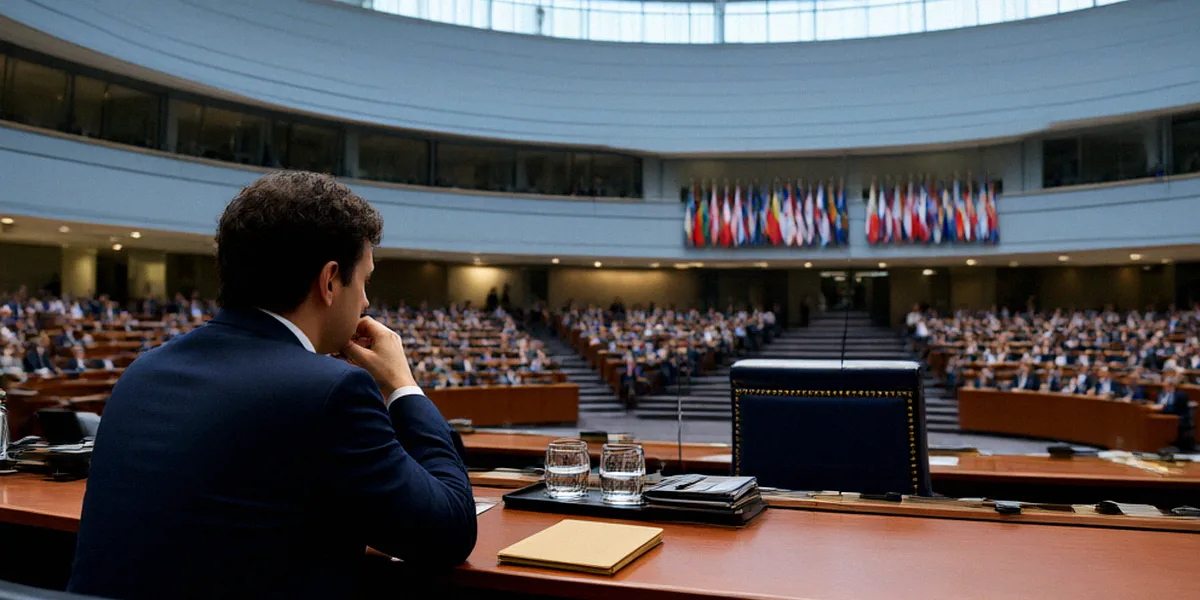
A resolution is a formal expression of position, not a law. That single distinction matters more than anything else on this page. When the European Parliament passes a resolution, it is stating what it thinks, wants, or condemns — it is not creating binding obligations for anyone. Legislation comes in the form of regulations and directives, which follow a completely different procedure involving the Commission’s proposal and, usually, agreement with the Council.
It also helps to know who is speaking. A European Parliament resolution is the Parliament’s own voice. Council conclusions are the agreed position of member state governments. Commission communications are the executive’s strategy papers. They often respond to each other, which is why you will see a Parliament resolution “welcoming” a Commission communication from three months earlier. The European Parliament passes hundreds of resolutions each term, often by simple majority, so the volume is high and the individual weight varies enormously.
Resolutions vs. Regulations and Directives
Regulations apply directly in all member states the moment they enter into force. Directives set a goal that member states must transpose into national law. Resolutions do neither. They can influence the Commission’s agenda, signal the Parliament’s red lines ahead of negotiations, and create political pressure — but no business faces a fine because of a resolution. If you are tracking compliance risk, you are reading the wrong document. If you are tracking political direction, you are reading the right one.
Who Can Table a Resolution
Several routes exist. Committees can table resolutions on matters within their remit. Political groups can table them. A group of MEPs above a minimum threshold can also table one, and the President of the Parliament can put forward resolutions on urgent matters. In practice, most substantive resolutions originate in committee and arrive at plenary with a report attached.
The Anatomy of a Resolution Document
Every resolution follows roughly the same skeleton, and once you recognise it, you can jump straight to the parts that matter. The structure is: title, citations, recitals, operative paragraphs, and sometimes annexes. We usually read the operative paragraphs first, then work backwards.
Citations and Recitals: The Setup
The citations sit at the top and tell you the legal and political basis for the text. They frequently cite the Treaty on European Union and the Treaty on the Functioning of the European Union, along with prior resolutions, Commission communications, and international agreements. These citations are a map of the argument’s foundations.
Then come the recitals — the paragraphs beginning with “whereas”. These set out the facts, concerns, and context the Parliament is relying on. They are not the ask. They are the justification. A recital that says “whereas the level of alignment on state aid has declined” is doing quiet work: it is establishing the premise for a demand that appears later.
Operative Paragraphs: Where the Action Is
Numbered operative paragraphs contain the actual positions. This is where you find the verbs that matter: “calls on the Commission to”, “urges member states to”, “condemns”, “welcomes”. If you only have five minutes, read the operative paragraphs and skip everything else. They are usually between ten and forty in number, and the first few tend to carry the headline message.
Annexes and Technical Detail
Annexes hold the detail that would break the flow of the main text: lists of affected sectors, proposed timelines, draft negotiating mandates, or technical criteria. They are worth checking when a resolution touches your industry directly, because the political language in the body is often softened while the annex does the precise work.
How Resolutions Move Through the European Parliament
The journey from idea to adopted text runs through committee, then plenary. Understanding this pipeline tells you when a text is still changeable and when it is effectively locked.
Committee Stage and Rapporteurs
A lead committee is assigned, and one MEP is appointed as rapporteur to draft the text. Other committees may issue opinions. This is the stage where lobbying actually changes outcomes, because amendments are still fluid and the rapporteur is negotiating compromises between political groups. Political groups like the European People’s Party and Socialists and Democrats shape resolution outcomes heavily here — a rapporteur from a large group can usually steer the final wording, while smaller groups trade support for specific paragraphs.
Plenary Debate and Amendments
The draft then goes to plenary, where MEPs debate and vote on amendments. Compromise amendments are often tabled jointly by the larger groups and tend to pass. This is where you see the difference between a text that reflects one group’s ambition and a text that reflects a broad majority’s lowest common denominator.
Voting and Roll-Call Records
Votes are usually public, and roll-call results are recorded in the Parliament’s minutes. That means you can see exactly how each MEP voted, which is genuinely useful when you want to know whether a UK-relevant paragraph had cross-party support or scraped through. A resolution adopted by 400 votes to 150 carries a different political signal from one adopted by 320 to 290.
Reading Between the Lines: Language and Signals
EU texts are written in a controlled diplomatic register, and the verbs are chosen with care. Learning the hierarchy of those verbs is the single fastest way to improve your reading.
Diplomatic Verbs and Their Weight
- “Notes” — neutral acknowledgement. No commitment implied.
- “Welcomes” — approval, often of a Commission proposal or a third-country move.
- “Regrets” — criticism without escalation. Frequently used where stronger language would split the majority.
- “Calls on” — a direct request. This is the workhorse of operative paragraphs.
- “Urges” — stronger than “calls on”, signalling impatience.
- “Condemns” — the strongest register, reserved for serious breaches.
When a text says “notes” where you expected “welcomes”, that is a signal of disagreement that could not be resolved. When “calls on” survives into the final text instead of being softened to “invites”, the majority held firm.
Amendments as Political Signals
Comparing the committee draft with the adopted text is one of the most revealing exercises available. Paragraphs that were deleted, verbs that were downgraded, and new sentences inserted at plenary all tell you where the political friction was. We treat the difference between draft and final as the real story.
What UK-Specific Mentions Reveal
UK readers should watch for references to the Trade and Cooperation Agreement and the Windsor Framework. These mentions are rarely accidental. A paragraph calling for “full and faithful implementation” of the Windsor Framework is a signal about the Parliament’s posture on Northern Ireland trade. A reference to the Trade and Cooperation Agreement’s level playing field provisions usually precedes a demand for stronger monitoring. When these appear, they often shape the tone of UK-EU negotiations months later.
Tools and Sources for Tracking EU Resolutions
You do not need to monitor the Parliament’s website daily. A small set of sources will keep you covered.
Official EU Databases
The European Parliament’s Legislative Observatory and EUR-Lex are key official databases for tracking resolutions. The Observatory tracks procedure files from committee assignment through to adoption, and EUR-Lex holds the final published texts with all language versions. The Parliament’s “What’s New” page and individual committee websites publish drafts early, sometimes weeks before plenary.
Newsletters and Alerts Worth Following
Official EU newsletters give you a weekly digest without the noise. We recommend setting up keyword alerts for terms relevant to your sector — “Windsor Framework”, “Horizon Europe”, “carbon border” — rather than subscribing to everything.
Cross-Checking with UK Sources
UK-focused outlets like the Financial Times and BBC Europe coverage are useful for interpretation, not for primary text. They will tell you what a resolution means for British interests, but always read the operative paragraphs yourself before repeating a summary.
Why This Matters for UK Readers
Post-Brexit, the UK no longer sits at the table, but the table still sets rules that reach British businesses and voters. Resolutions are where the Parliament signals which way it intends to push.
Post-Brexit Relevance
Take two concrete examples. On the Northern Ireland Protocol, now largely superseded by the Windsor Framework, Parliament resolutions shaped the EU’s negotiating posture and its tolerance for unilateral UK action. On Horizon Europe association, resolutions and committee reports signalled the Parliament’s conditions for UK participation long before the formal agreement. In both cases, reading the resolutions early would have given UK stakeholders months of advance warning.
Anticipating Regulatory Change
Resolutions frequently precede legislation. A resolution calling for stricter due diligence requirements is often the first public marker of a directive that arrives eighteen months later. For UK exporters, that gap is the window to prepare. Treat resolutions as an early-warning system rather than a news item.
FAQ
Is an EU resolution legally binding in the UK?
No. Resolutions express a political position and create no legal obligations, in the UK or anywhere else. Binding EU law comes through regulations and directives, which the UK is no longer subject to except where the Windsor Framework or specific agreements apply.
How quickly can a resolution become law?
There is no fixed timeline, but a resolution calling for new rules is often followed by a Commission proposal within a year or two, and then by a legislative procedure that can take another eighteen months to three years. The resolution itself is the earliest signal.
Where can I find how my former MEP or a specific group voted?
Roll-call results are published in the European Parliament’s plenary minutes and are searchable through the Legislative Observatory. Votes are usually public, so you can trace individual MEP positions on specific paragraphs.
Do resolutions mention the UK often?
More often than you might expect. References to the Trade and Cooperation Agreement, the Windsor Framework, and Northern Ireland appear regularly in resolutions touching trade, fisheries, and security. These passages are worth reading closely because they often preview the Parliament’s position in future negotiations.
What is the fastest way to read one?
Start with the operative paragraphs, then read the recitals to understand the reasoning, then check the citations for the legal basis. Skip the annexes unless the topic directly affects you. That order will get you to the substance in under ten minutes.
Resolutions are not impenetrable legal instruments — they are political documents written in a formal register, and they reward a structured reading. Next time one crosses your desk, use our checklist: operative paragraphs first, recitals second, citations third, and always compare the draft against the final text. You will find the decision hiding in plain sight.




Post Comment